Retail Audit & Expansion
The Challenge: Navigating Nigeria’s Retail Complexity
Nigeria’s retail landscape is vast, dynamic, and heavily fragmented—where over 80% of volume moves through informal and traditional trade channels. Relying on distributor reports or guesswork leads to out-of-stocks, unverified merchandising spend, grey-market leakage, and failed regional expansions. You don’t just need data; you need verified, ground-level truth.
Our Core Capabilities
1. Granular Retail Audits & Census Mapping We deploy tech-enabled field forces across all 36 states and the FCT to capture real-time outlet intelligence.
- Outlet Enumeration & Geotagging: Build a verified, GPS-pinned master database of active retail points categorized by channel tier (Open Market, Neighborhood Duka/Kiosk, Supermarket, Pharmacy, HoReCa).
- On-Shelf Availability (OSA) & Stock Tracking: Track numeric and weighted distribution, out-of-stock (OOS) triggers, and SKU velocity down to the individual store level.
- Share of Shelf & Planogram Compliance: Measure brand facing ratios against competitors and audit POSM (Point of Sale Materials) deployment with timestamped photographic proof.
- Pricing & Promotion Intelligence: Monitor recommended retail price (RRP) adherence, informal price tiering, and competitor discounting in real time.
2. Data-Driven Route-to-Market (RtM) & Expansion Expanding into new territories or deepening penetration requires surgical precision, not blanket spending.
- White-Space Identification: Overlay demographic density, purchasing power indicators, and competitor presence to pinpoint high-potential, underserved retail clusters.
- Territory & Beat Optimization: Design deterministic sales routes and call frequencies that maximize field rep productivity and minimize transit downtime in high-density urban hubs and peri-urban corridors.
- Distributor & Sub-Distributor Alignment: Map wholesaler-to-retailer supply flows to eliminate channel conflict, close coverage gaps, and optimize trade margins.
- New Product Launch (NPD) Readiness: Execute rapid pre-launch seeding audits and post-launch speed-to-shelf tracking to guarantee early commercial traction.
Why Partner With Us? (The 15-Year Advantage)
- Hyper-Local Market Mastery: From Balogun and Ariaria to modern malls in Lagos, Abuja, and Port Harcourt, our methodologies are built specifically for Nigerian market realities—not imported templates.
- Verified Data Integrity: Multi-layered validation protocols—combining GPS geofencing, image verification, automated anomaly detection, and strict supervisor-to-enumerator ratios—ensure 99%+ data accuracy.
- Actionable Business Intelligence: We don’t dump raw spreadsheets. You receive interactive, executive-ready dashboards highlighting immediate revenue leaks and expansion priorities.
Retail Monitoring Solution
Retail Scope is a retail-customed focused intelligence software that helps brands capture data at the last mile retail channel, this platform is a multitenant platform with a full- scaled backend server and a dedicated PostGre managed database with pool connection and database concurrency(99.9% availability)
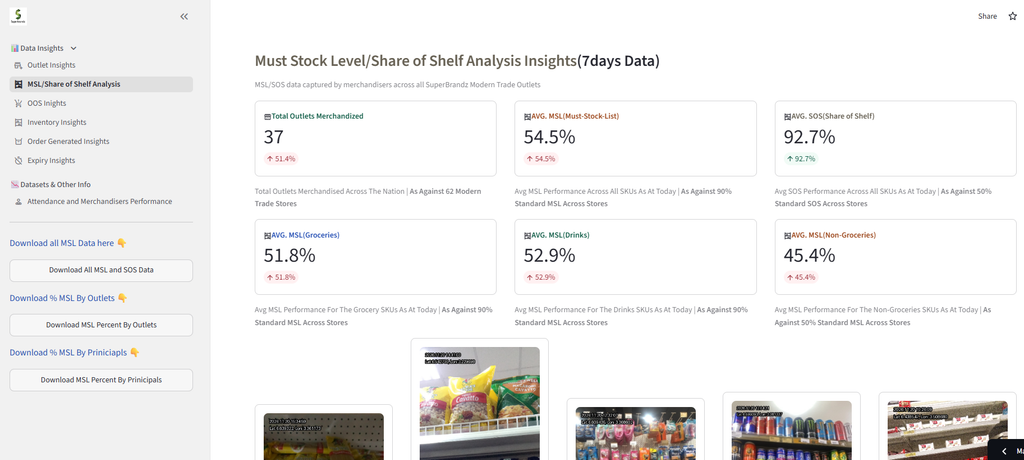
This platform was built by – D-aggregate Technologies. D-Aggregate Tech is a retail intelligence and research company focused data aggregation at the last-mile retail and consumer insights that helps brands make decision driven solely by data.
Consumer & Retail Research
We conduct retail shelf-test for multinationals and brands in the FMCGs – our 15years expertise in the area of retail research has help brands accelerate their new product distribution shoppers validation and propensity to purchase across Nigeria.
A Retail Shelf-Test is a live, controlled, in-store experiment used by FMCG brands and retail intelligence teams to measure how shoppers actually respond to a product, packaging design, price point, or merchandising layout in a real retail environment—before committing to a full-scale nationwide launch or costly trade spend.
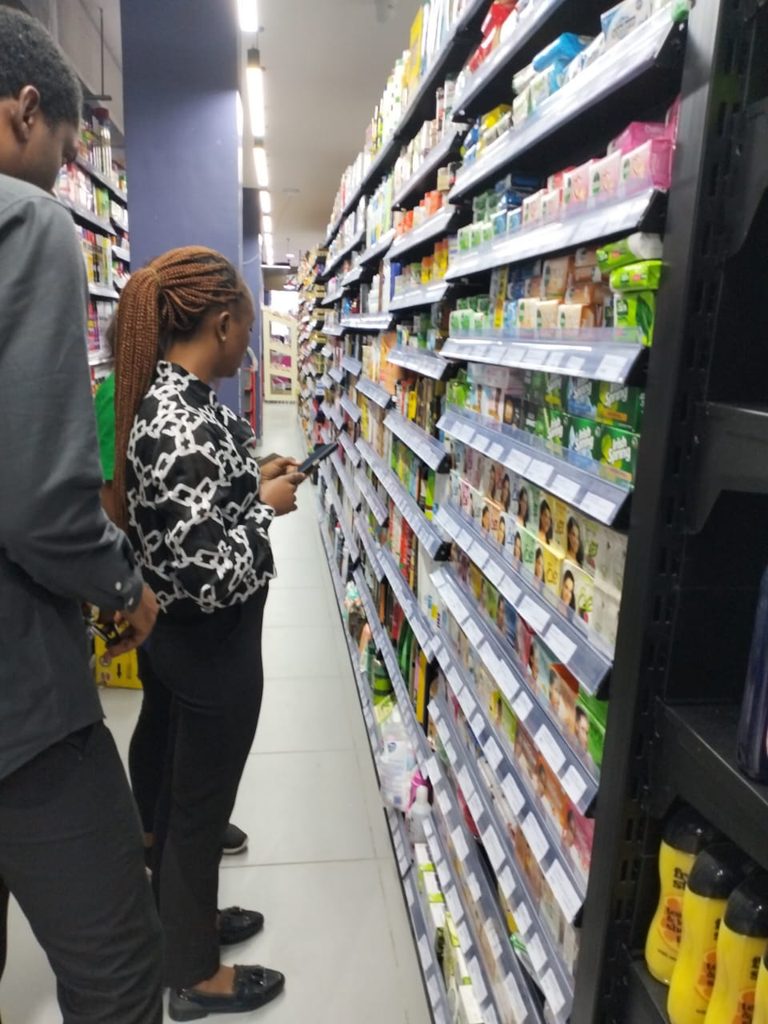
Unlike focus groups or online surveys (which measure stated intent, often inflated by shopper bias), a shelf-test measures actual shopper behavior and real cash offtake amidst real competitor noise.
1. What a Retail Shelf-Test Typically Evaluates
Brands deploy shelf-tests to validate specific commercial variables before scaling:
- New Product Development (NPD) & Pack Sizes: Testing whether a new SKU or a smaller/larger pack size (e.g., introducing a ₦200 sachet alongside a ₦1,500 jar) drives incremental volume or simply cannibalizes existing SKUs.
- Packaging & Visual Standout: Placing a redesigned label or pack format directly next to category leaders to test “stopping power” and shelf visibility.
- Price Elasticity: Testing two or three different Recommended Retail Prices (RRPs) across matched store clusters to find the exact threshold where shopper velocity drops.
- Planogram & Merchandising Execution: Measuring the sales lift generated by eye-level placement, branded floor stands, end-cap displays, or dedicated coolers versus standard shelf placement.
2. How It Works (Test vs. Control Methodology)
To isolate the true impact of the change from external factors (like payday spikes, seasonality, or competitor promos), shelf-tests use a strict A/B (Test vs. Control) framework:
- Outlet Selection & Matching: Select a representative sample of outlets (e.g., 30–50 stores per cell) segmented by channel tier (e.g., modern supermarkets vs. neighborhood provision stores/open-market lockups) and matched by baseline category turnover.
- Test Group vs. Control Group:
- Test Stores: Receive the new SKU, price point, packaging, or display intervention.
- Control Stores: Maintain the existing status quo (or existing category benchmark) with identical baseline footfall and demographics.
- Pre-Test Baseline Audit: Field auditors capture 2–4 weeks of baseline stock levels, facings, and category velocity before the test begins.
- Controlled Execution & Monitoring: Field teams place the test stock, enforce strict planogram/pricing compliance, and conduct high-frequency audits (every 3–7 days) to track replenishment, prevent artificial out-of-stocks, and record shopper observations.
- Lift & Cannibalization Analysis: At the end of the test window (typically 4–8 weeks), total unit offtake in Test stores is compared against Control stores using a Difference-in-Differences calculation to measure true incremental sales lift.
3. Practical Nuances in the Nigerian FMCG Context
Executing a reliable shelf-test in Nigeria requires adapting standard modern-trade testing to local retail realities:
- Open-Market & Kiosk Proxies: Because over 80% of Nigerian FMCG volume moves through traditional trade without barcode scanners (EPOS), shelf-tests cannot rely on scanner data. Instead, field auditors use opening stock + deliveries – closing stock (stock-count audits) paired with short, rapid exit interviews at the point of purchase.
- Price Leakage & Informal Tiering: Traders in open markets (like Mile 12, Bodija, or Onitsha Main Market) dynamically adjust margins. Test protocols must track actual shelf selling price alongside wholesale carton price to see if retailers pocket trade discounts rather than passing lower prices to shoppers.
- Working Capital & Credit Friction: If a test SKU moves slowly in week one, small retailers may push it to the back of the shelf to prioritize fast-turning cash cows. Guaranteed buy-back agreements or seeding allowances are often used during the test window so retailer liquidity doesn’t skew the shelf experiment.
Retail Merchandising & AI
Retail Merchandising & AI is the integration of Computer Vision, Machine Learning, and Predictive Analytics into in-store execution—transforming manual shelf checks, static planograms, and guesswork replenishment into automated, real-time retail intelligence.
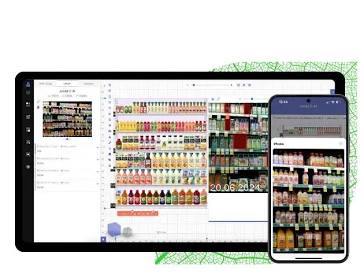
In traditional FMCG merchandising, a field rep or merchandiser spends 15–30 minutes manually counting facings, logging out-of-stocks, and checking price tags. With AI, a single smartphone photo or fixed shelf sensor captures, analyzes, and turns shelf reality into immediate field tasks within seconds.
1. Core Applications of AI in Retail Merchandising
- Computer Vision & Image Recognition (IR) for Shelf Audits: Merchandisers snap photos of a category bay, gondola end, or chiller on a mobile device. Trained object-detection models instantly identify individual SKUs (even differentiating subtle pack sizes or flavor variants) to calculate On-Shelf Availability (OSA), Share of Shelf (SoS), Facing Counts, and Planogram Compliance—eliminating human counting errors and “armchair auditing.”
- Optical Character Recognition (OCR) for Price & Promo Tracking:AI reads shelf-edge price tags and promotional wobblers directly from shelf images, flagging Recommended Retail Price (RRP) violations, missing price labels, or unauthorized competitor discounting in real time.
- AI-Driven Planogram & Assortment Optimization: Instead of using a one-size-fits-all planogram across every store, machine learning models combine store-level POS/offtake velocity, local demographics, and shopper traffic patterns to generate store-cluster-specific planograms—putting high-velocity SKUs at eye level and cutting slow-moving dead stock.
- Predictive Replenishment & Out-of-Stock (OOS) Prevention:Predictive models analyze historical sell-out rates, seasonality, weather, and payday cycles to forecast stockouts before the shelf goes empty, automatically triggering replenishment orders or alerting merchandisers to pull stock from the backroom.
- Guided Field Execution (“Next-Best-Action” for Reps): Rather than giving reps a generic checklist, AI ranks store visits and in-store tasks by revenue impact—for example, telling a merchandiser in-app: “SKU X is out of stock on the main shelf but available in backroom inventory; restock 12 units before leaving.”